When a fractional LinkedIn strategist helps B2B founders build a practical content system.
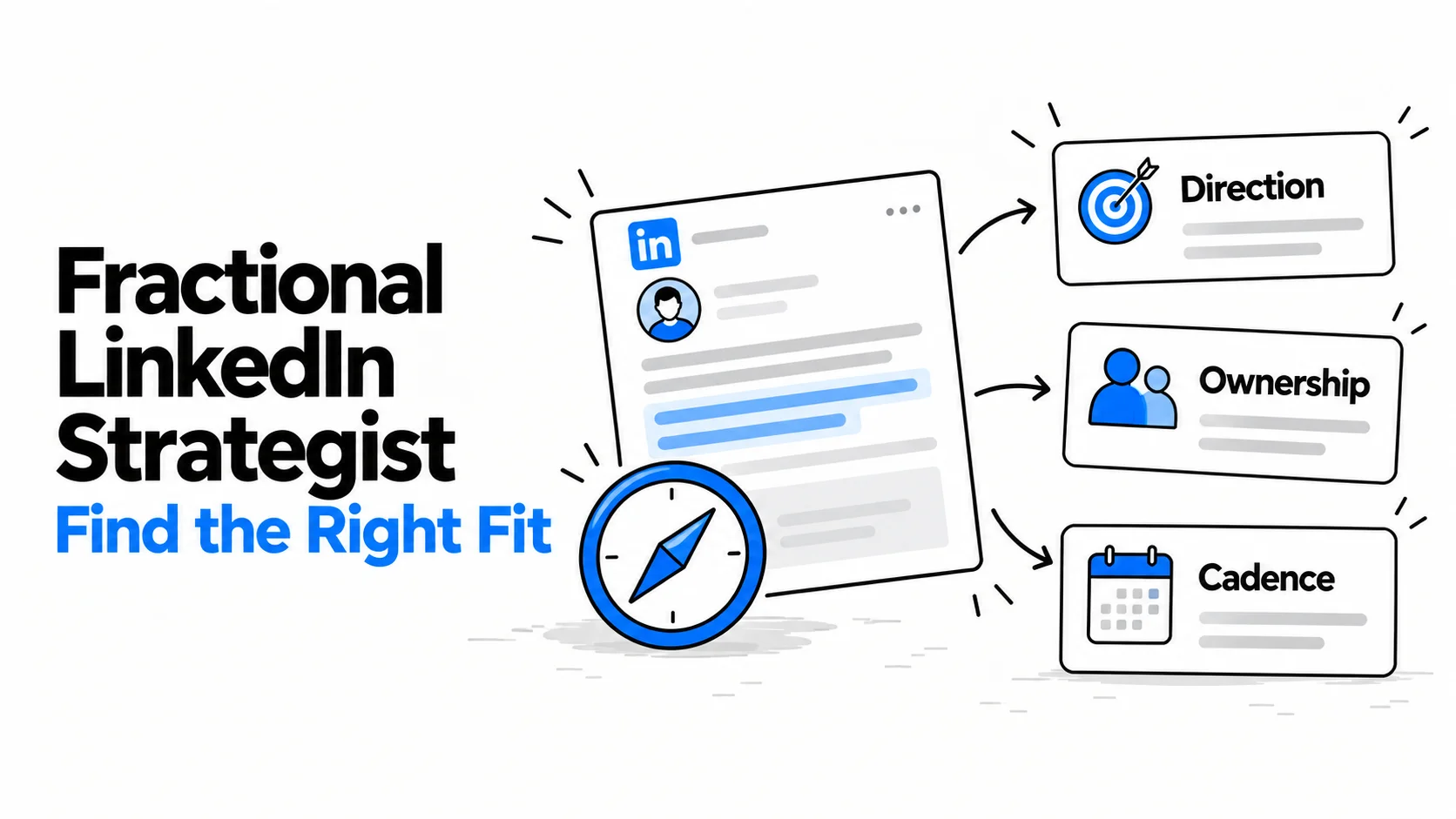
A fractional LinkedIn strategist gives a B2B founder a defined senior operating role without pretending that a few posts are a complete growth system. The useful version of the role connects founder expertise, buyer questions, editorial choices, and a workable review process.
It is not an automatic pipeline machine. A founder still needs a real point of view, accurate source material, and the judgment to approve what appears under their name. The strategist's job is to turn that raw material into a focused content system the company can sustain.
For a Series A or later team, the question is usually not whether LinkedIn matters in the abstract. It is whether the team has someone who can make consistent editorial decisions while the founder is busy running the company. This guide helps you decide when a fractional role is useful, what to ask for, and where its boundary should be.
A fractional strategist is most useful when there is enough founder insight to work with, but no clear owner for turning it into a repeatable program. Perhaps a CEO has strong customer conversations and product opinions but posts only when a launch creates urgency. Perhaps marketing can distribute content but lacks the context to decide which founder ideas are worth developing.
The role can work when the company needs senior direction more than a full-time headcount. A hypothetical engagement might include a monthly positioning session, an editorial plan, interviews with the founder, feedback on drafts, and a review of what the team learned. It would not automatically include account access, paid media, community management, or every production task.
It is less useful when the company has not decided who the audience is, has no source material to share, or wants a provider to manufacture opinions the founder does not hold. Those are strategy questions the founder and leadership team need to resolve first.
Titles are often used loosely. A strategist may set the narrative, audience, themes, and decision rules. A writer may turn an interview into a draft. A marketer may format assets, coordinate approvals, and distribute approved work. One partner can cover more than one of these jobs, but the scope should say which responsibilities are actually included.
Ask a prospective partner to explain their operating model in plain language. Who interviews the founder? Who decides whether an idea is strong enough to develop? Who fact-checks product or customer claims? Who gives the final approval? If those answers remain vague, the team will likely discover the gaps after the calendar has already slipped.
LinkedIn's current User Agreement says members must keep accounts secure, not share or transfer them, and are responsible for activity through their accounts. Build the workflow around founder approval and an access model that respects those boundaries rather than treating credentials as a routine deliverable.
The opening period should create evidence about the founder's voice and the market's questions. A good plan does not promise a specific follower count, lead total, or revenue result. It sets a small number of decisions that the team will revisit with real observations.
Clarify the audience: Name the buyers, peers, and partners whose questions the founder can answer credibly.
Extract source material: Use interviews, customer-facing notes, and operating experience, while keeping confidential information out of the draft process.
Choose a few repeatable themes: Prefer clear tensions and useful observations over generic advice or trend commentary.
Set a review rhythm: Give the founder a predictable place to correct facts, tone, and sensitive details before anything is published.
Learn from the work: Review what started qualified conversations and what felt forced, then adjust the next set of ideas.
That is closer to building an editorial capability than filling a quota. It also helps a founder see whether the relationship is improving clarity and consistency before expanding the scope.
A scorecard makes a buying decision easier because it turns broad claims into specific questions. You can use it to compare a fractional strategist, an agency, or an internal hire.
Use the scorecard alongside a LinkedIn content audit. The audit shows what the current profile and content are signaling; the scorecard shows whether the proposed operating model can improve that signal without asking the founder to become a full-time creator.
The fractional model should make your internal team clearer, not dependent. A strategist may own the narrative and editorial decisions while a founder provides judgment and a marketer handles publishing coordination. If the company later hires in-house, the useful handoff is a documented point of view, a working calendar, source notes that can be shared, and a review process people understand.
That matters when you are deciding whether to build a LinkedIn content team in-house or through outside partners. A temporary senior role can help a small team establish the system. It should not hide who ultimately owns the company narrative.
Bring a few concrete questions to the conversation:
Good answers are specific about process and limits. Be cautious when a provider skips the founder's input, guarantees commercial results, or treats AI-generated copy as a substitute for firsthand judgment.
A fractional LinkedIn strategist can be a practical bridge between an ambitious founder and a team that needs consistent editorial direction. The right engagement makes the founder's experience easier to express, review, and distribute without claiming to replace it.
Rethoric helps B2B founders turn lived operating experience into credible LinkedIn content through interviews, human writing, review, and distribution. Explore LinkedIn ghostwriting for founders or book an intro call to discuss the right operating model.
