A practical guide for B2B founders evaluating a LinkedIn profile writer, from discovery and drafting to review and handoff.
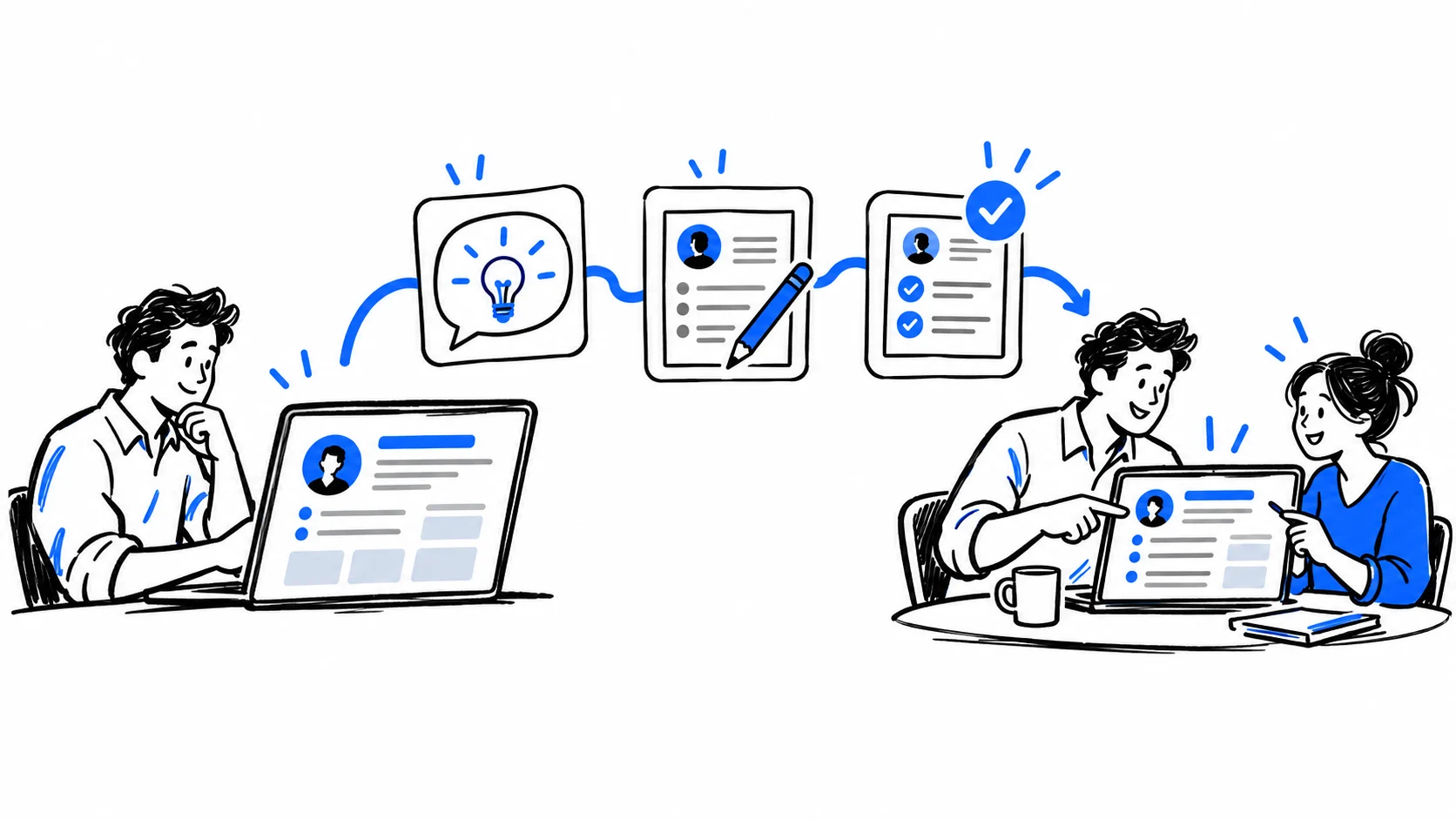
A LinkedIn profile writer helps a founder make the top of their profile easier for the right buyer to understand. That can include the headline, About section, experience descriptions, featured material, and the way those pieces support each other. It is not a substitute for the founder's point of view or a shortcut to credibility.
LinkedIn treats the introduction area as the first part of a profile that members see, and it includes fields such as the headline and current position. Its guidance also describes the About section as a place to express mission, motivation, and skills. A writer should use that structure to clarify what is already true about the business, not manufacture a more impressive version of it.
For a B2B founder, the work is useful when a prospective customer can quickly answer three questions: what do you understand, who do you help, and why should they trust your perspective? The writing is only one part of the job. The source material and review process determine whether the profile sounds specific or generic.
A profile is an orientation point. It gives someone context when they arrive from a post, a referral, an event, or a search result. Ongoing content has a different job: it develops individual ideas over time and lets readers see how you think.
That distinction matters when you hire. A profile writer may be the right fit when your current profile no longer reflects your market, role, or point of view. A LinkedIn ghostwriting engagement may be a better fit when the profile is clear but you need a reliable process for interviews, drafts, review, and distribution. You may need both, but they should not be treated as the same deliverable.
A good profile writer will explain what is included. Ask whether the scope covers only an About section, or whether it includes a profile audit, headline options, experience descriptions, featured links, and a review round. The answer should be concrete enough that you can see where your own input is needed.
Many founder profiles default to broad labels: visionary, innovative, results-driven, or passionate. These phrases do not give a buyer much to evaluate. Better source material includes decisions you made, problems you have seen repeatedly, the work you personally lead, the language customers use, and claims your team can support.
For example, a hypothetical founder might have led a company through a move from services to a software product. That is a real operating decision worth explaining. “Transformational leader” is a conclusion that a reader cannot verify. The writer's job is to find the first kind of material and leave the second kind out unless the founder can make it specific.
LinkedIn's Professional Community Policies require members to use their true identity and share information that is real and authentic. Treat that as a practical writing constraint. Do not add customer names, revenue claims, awards, credentials, or product capabilities because they sound useful. Add them only when they are accurate, approved, and relevant to the reader's decision.
Processes vary, but a credible engagement usually has clear stages. You should know who is responsible for each one before work starts.
Discovery: The writer gathers your role, audience, product context, previous profile, public material, and constraints. A short interview is often more useful than a long questionnaire because it exposes the language you use when describing hard choices.
Positioning: You agree on the professional context a visitor needs first. This is not a slogan. It is a decision about what your profile should make clear before someone reads a post or sends a message.
Drafting: The writer develops the profile sections that are in scope, separating factual statements from suggested framing. The founder should be able to trace important claims back to a source.
Review: You check accuracy, confidentiality, voice, and links. Product, legal, or customer approval may be needed for some claims. A fast review is helpful, but an unreviewed profile is not a finished profile.
Handoff: You receive final copy, publishing guidance, and any open questions. You or an authorized teammate makes the profile edits in your own account.
That last boundary is important. A writer can prepare the content, but the founder should retain ownership of the identity and information presented on their profile. If a provider's process blurs that line, ask how account access and approvals are handled.
The best questions reveal how a provider thinks, not just whether they can produce polished copy.
Be wary of answers that promise a profile will generate a certain number of leads, views, or meetings. A profile can make the next conversation clearer, but commercial outcomes also depend on your audience, offer, content, sales motion, and timing. A responsible provider should describe the work they control and be direct about what they do not.
Before you update anything, read the draft without the benefit of your own context. Does the opening explain what you do in plain language? Does the About section show the problem you have earned the right to discuss? Do the experience entries add evidence rather than repeat the headline?
Then check the connections between the sections. Our guides to the LinkedIn headline and About section can help with that review. The goal is not to squeeze every keyword into the profile. It is to give a relevant visitor a coherent route from your role to the expertise behind it.
Also test it against your next few pieces of content. If a post makes a claim about a problem you solve, a reader who clicks through should find profile context that supports the claim. If the profile and content point in different directions, revise the source message before you invest in more volume.
A specialist writer can be a focused option when you have the expertise but need help shaping and editing it into a profile. An agency can be useful when the profile is one part of a wider founder-content system that includes interviews, ongoing writing, review, and distribution. An internal marketer may be the right owner when the team already has close access to the founder and needs to keep the profile aligned with frequent changes in product or positioning.
These are starting points, not fixed categories. The useful choice is the one that keeps factual judgment close to the founder while giving the work enough editorial discipline to ship. If you are comparing broader partners, see our guide to a LinkedIn content agency for founders.
The right LinkedIn profile writer will not invent a personal brand for you. They will help you name the problems, decisions, and experience that buyers should understand before they decide whether to start a conversation.
Rethoric helps B2B founders turn real operating expertise into credible LinkedIn content through interviews, human writing, review, and distribution. If you need a profile that connects to an ongoing founder-led content process, explore LinkedIn ghostwriting for founders or book an intro call.
